3 Step COR Checklist for Directors to Prove Singapore Tax Residency


A company is tax resident in Singapore for a Year of Assessment if the control and management of its business was exercised in Singapore during the preceding calendar year. That single test governs everything else. If you meet it, you can apply for a Certificate of Residence through myTax Portal, which foreign tax authorities require before granting treaty benefits under Singapore’s double taxation agreements.
TL;DR:
The control and management of a Singapore company must be exercised in Singapore through strategic decisions made by authorized individuals, not just formal registration or local address.
Evidence for Singapore residency should include specific, dated board decisions, meeting records, signed resolutions, and local operational documents, all documented contemporaneously.
A Certificate of Residence helps companies prove their tax residency to foreign authorities for treaty benefits, but applications from foreign-owned holding companies and nominee entities face closer scrutiny.
Virtual meetings require record-keeping of directors’ locations and chairpersons’ authority, as IRAS closely examines decision-making processes, especially post-COVID concession periods.
Residency status can change yearly based on facts like board locations, decision-making authority, or treaty tie-breakers, making ongoing documentation discipline essential.
Table of Contents
What does the “control and management” test mean in practice?
Control and management refers to strategic and policy decisions, not day-to-day operations. The Inland Revenue Authority of Singapore (IRAS) is looking for where the people with real authority over the company’s direction actually make their calls, and it treats this as a question of fact rather than a box-ticking exercise.
That distinction trips up a surprising number of directors. Registering a company in Singapore, keeping a local registered address, or appointing a resident company secretary does none of the heavy lifting on its own. IRAS wants to see the mechanics of governance happening here, not just the paperwork of incorporation.
The kinds of decisions that count include:
Approval of annual accounts and dividend policy
Appointment or removal of directors and key executives
Strategic decisions on financing, mergers, acquisitions, or major capital expenditure
Adoption of corporate policy affecting group-wide operations
Authorisation of major contracts or business restructuring
Board meetings are the natural evidence trail for most of this, which is why IRAS scrutinises board minutes so closely. A board that meets in Singapore but merely rubber-stamps decisions already made elsewhere will not satisfy the test, even if every minute says “Singapore” at the top. What matters is where the thinking happened, not where the signatures went.
For groups with a Singapore holding company and offshore parent, this often means the local board needs genuine decision-making latitude, not a ceremonial function. If the real strategy sits with a parent company overseas and the Singapore board simply confirms it, IRAS can and does look past the geography stated in the minutes.
How do you document and evidence residency for IRAS?
Contemporaneous records beat reconstructed ones every time. IRAS and practitioners alike caution against assembling evidence after the fact. Decisions should be documented as they happen, dated accurately, and kept in a form that shows genuine deliberation rather than a rubber stamp.
Build your evidence file around these elements:
Board minutes that name the decision, the authority, and the location. Rather than “the board discussed financing options,” write “the board resolved, under clause X of the Articles, to approve the $2 million facility, with the decision made at the Singapore office on [date].”
Attendance and location records for every meeting, physical or virtual, including who chaired and from where each director joined.
Signed resolutions and decision memos kept as originals, not summaries drafted months later.
Operational evidence: contracts for local executives, key employee employment records, a local bank account with transaction history, and invoices tied to Singapore-based operations.
Entity-specific supplements: subsidiaries typically need less than newly established branches or Variable Capital Companies (VCCs), where IRAS often asks for extra proof that management genuinely sits in Singapore rather than with an offshore parent.
Pro Tip: Draft board minutes as if a tax examiner will read them in three years’ time. Vague language like “the board considered various matters” gives IRAS nothing to work with; specific, dated, attributable decisions do.
Board minutes should record which strategic decisions were made in Singapore, who authorised them, and under what authority, according to IRAS guidance on tax residency. Boilerplate attendance lists without substance rarely survive scrutiny.

What is a Certificate of Residence and who can apply?
A Certificate of Residence (COR) is the document Singapore-resident companies use to prove their tax status to a foreign tax authority, most commonly to claim reduced withholding tax rates or other benefits under a double taxation agreement (DTA). Without it, a treaty partner has no formal proof your company qualifies for anything beyond the default domestic rate.
Not every Singapore-incorporated company can get one. IRAS generally requires the applicant to be tax resident under the control and management test outlined above, and it applies extra caution to two categories:
Foreign-owned investment holding companies with limited local substance
Nominee companies set up purely to hold assets on behalf of an offshore owner
Both face closer questioning because the presumption, fairly or not, is that real control sits overseas. There are exceptions for branches and non-incorporated entities where control and management can be demonstrably shown to sit in Singapore, but these require a written request rather than the standard online route.
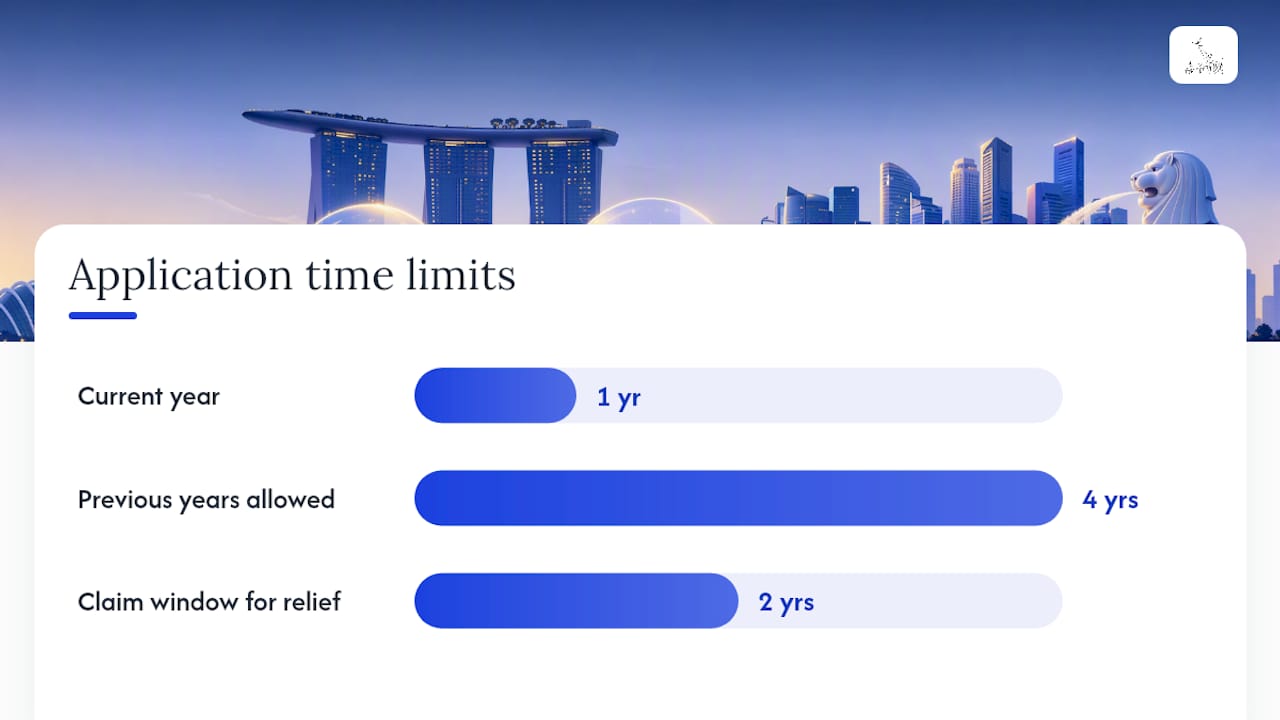
The application itself runs through myTax Portal, and companies can apply for a COR for the current year and up to four previous calendar years. IRAS recommends applying before claiming treaty relief, or within two calendar years of receiving or expecting to receive the relevant income, whichever gives you more breathing room. Expect IRAS to follow up with clarifying questions if your evidence file has gaps, particularly on holding structures.
What pitfalls does IRAS scrutinise most closely?
Foreign-owned holding and nominee structures draw the sharpest attention. IRAS treats the control and management test as a matter of overall context, not just what the minutes state, and it applies particular scrutiny to entities whose only apparent function is holding shares or assets for an offshore parent. If that describes your structure, expect to provide additional proof that Singapore-based directors exercise genuine strategic authority, not delegated approval.
Virtual meetings deserve separate caution. COVID-era concessions that relaxed presence requirements applied only for Year of Assessment 2021 and 2022, and there is no ongoing concession beyond that window. Companies still running board meetings online need to record each director’s physical location and confirm who chaired the meeting and under what authority. Skipping this leaves a gap IRAS is likely to probe.
Branches and non-incorporated entities carry their own risk profile:
Standard COR application routes do not apply; a written request to IRAS is required
Evidence bar tends to be higher given the entity has no separate Singapore incorporation to anchor residency
IRAS applies the same control and management logic but with closer factual examination
What is the practical COR application checklist and timeline?
Directors who treat this as a compliance sprint rather than an ongoing discipline tend to find gaps at the worst possible moment, usually when a treaty partner is already asking questions. Work through it methodically instead.
Identify the calendar year to certify, then map every material board decision from that year to a dated, signed document.
Assemble the full evidence file: board minutes, director role confirmations, key employee contracts, operational records, and bank statements showing local activity.
Submit via myTax Portal, respond promptly to any IRAS follow-up queries, and retain a digital copy of the full application for at least two years.
Processing generally moves faster when the file is complete on first submission. Applications with holding-company or nominee-structure characteristics should expect additional questions and a longer runway.
Document type | What it should show | Who typically needs it |
Board minutes | Dated decisions, named authority, meeting location | All applicants |
Director role confirmation | Appointment letters, scope of authority | All applicants |
Key employee evidence | Contracts, local employment records | Operating companies |
Bank and operational records | Local account activity, contracts, invoices | Operating companies |
Written request supplement | Additional control and management evidence | Branches, non-incorporated entities |
How does tax residency affect income tax obligations in Singapore?
Residency status changes what a company can claim, not just what it must pay. A Singapore tax resident company remains subject to corporate income tax on income sourced in Singapore, and on foreign sourced income received in Singapore unless a specific exemption applies. Residency itself does not change the corporate tax rate, but it opens the door to schemes and treaty protections that non-resident entities cannot access.
Subsidiaries genuinely controlled and managed in Singapore may qualify for domestic reliefs such as Partial Tax Exemption (PTE) and the Start-Up Tax Exemption (SUTE), both of which reduce the effective tax burden on qualifying chargeable income. Losing residency, or never establishing it in the first place, removes access to these schemes and to COR-backed treaty relief on foreign income and withholding taxes.
There is a knock-on effect worth flagging for group structures. IRAS can reassess a company’s residency status if the facts change, and residency can also shift under treaty tie-breaker rules where instruments like the Multilateral Instrument (MLI) apply. A company that was resident last year is not automatically resident this year. Directors managing cross-border groups should treat residency as something to reconfirm annually rather than assume permanently settled, particularly where board composition, meeting patterns, or ownership structure have changed.
Colin’s take: what separates a clean COR application from a rejected one
The gap is almost always in the paper, not the substance. Companies that genuinely run their strategic decisions from Singapore still get queried by IRAS because their board minutes read like attendance registers rather than decision records.
The fix is simple discipline: draft minutes that name the decision, the authority behind it, and the date, every single time. Directors who build that habit from incorporation rarely face a difficult COR conversation later. Those who try to reconstruct it retrospectively, when a treaty partner is already asking for proof, almost always find gaps they cannot fill convincingly.
— Colin
How Headington helps you get COR-ready
Getting the control and management test right on paper is exactly the kind of work that benefits from a second pair of eyes before IRAS ever sees your file. Professional firms often assist company directors on document preparation, board minute drafting, evidence review, and liaison with IRAS during the application itself, drawing on extensive experience advising businesses on cross-border structuring across many countries.
If your board minutes currently read more like attendance sheets than decision records, or if you are structuring a new Singapore entity and want the evidence trail built correctly from day one, that is precisely where professional corporate secretarial and legal advisory support is valuable. Rather than discovering a documentation gap when a treaty partner queries your COR, get the file right before you submit it. Visit Headington to talk through your company’s residency position and put a proper evidence framework in place before your next Year of Assessment closes.
Sources
FAQ
What proves a company is tax resident in Singapore?
Tax residency is established by the control and management test, meaning strategic and policy decisions were exercised in Singapore during the preceding calendar year, as confirmed by IRAS. A Certificate of Residence is the formal document that proves this to foreign tax authorities.
How long does a Certificate of Residence application take?
IRAS does not publish a fixed processing time, but applications with complete, contemporaneous evidence tend to move faster; incomplete files or holding-company structures typically draw follow-up queries that extend the timeline.
Can a foreign-owned holding company get a Certificate of Residence?
It is possible, but IRAS applies closer scrutiny to foreign-owned investment holding and nominee companies and expects stronger evidence that genuine control and management sit in Singapore rather than with the offshore owner.
Does having a registered office in Singapore make a company tax resident?
No. A registered address or a resident company secretary alone does not satisfy the control and management test; IRAS looks at where strategic decisions are actually made.
Can a company lose its Singapore tax resident status?
Yes. Residency is reassessed based on the facts of each calendar year, and changes to board composition, decision-making location, or treaty tie-breaker rules such as the MLI can shift a company’s status from one year to the next.
Comments