Avoid S$50,000 Fines: Company Secretary Requirements in Singapore


Every company incorporated in Singapore must appoint a qualified company secretary within six months of incorporation, and that office cannot sit vacant for more than six continuous months. Miss either deadline and both the company and its directors risk a fine of up to $1,000. If you outsource the role, your provider must be registered under the Corporate Service Providers Act 2024 (CSP Act), or you’re exposing your business to a supplier that shouldn’t legally be trading.
TL;DR:
A company secretary must be appointed within six months of incorporation and cannot remain vacant for more than six months continuously.
The secretary must be a natural person ordinarily residing in Singapore, and the sole director cannot also be the sole secretary.
Outsourcing secretarial services requires selecting a CSP registered under the CSP Act, with verification of current registration and named qualified individuals.
Changes to officers, including secretaries, must be filed within 14 days, and failing to do so can lead to fines and operational risks.
Choosing a provider with proven experience and proper documentation reduces the risk of compliance gaps that could escalate into legal or financial penalties.
Table of Contents
What are the statutory company secretary requirements in Singapore?
Section 171 of the Companies Act 1967 is the backbone of every company secretary requirement in Singapore, and it’s worth reading properly rather than skimming a summary. It sets three obligations that catch out founders repeatedly.
Appointment deadline: a secretary must be in place within six months of incorporation, and the office cannot remain vacant for more than six continuous months at any later point either.
Eligibility: the secretary must be a natural person ordinarily resident in Singapore. A company cannot appoint another corporate entity to the role.
Competence duty: directors carry a personal duty to satisfy themselves that whoever they appoint has the knowledge and experience to discharge the role properly, not just a name on a filing.
Sole director rule: if your company has only one director, that person cannot also be the sole secretary. This trips up more first time founders than almost any other rule in the Act.
On the paperwork side, the incoming secretary signs a consent to act (Form 45B), which then gets lodged through BizFile, ACRA’s online filing portal. Endorsement windows apply in most cases, though transactions filed by a registered corporate service provider are often exempt from that step, which is one reason many companies hand the job to a specialist rather than manage it themselves.
What does outsourcing mean under the new CSP Act?
If you’re not appointing an in-house secretary, you’re almost certainly outsourcing to a corporate service provider (CSP), and the rules around who can legally offer that service changed materially in 2025. Since 9 June 2025, any business providing corporate secretarial services to third parties has needed to be registered under the CSP Act. This isn’t a formality. Operating unregistered carries a fine of up to $50,000 and imprisonment of up to two years.
Registered CSPs must also nominate Registered Qualified Individuals (RQIs), the named staff authorised to handle filings on the firm’s behalf, and renew their registration on a set cycle while meeting anti-money laundering and counter-terrorism financing obligations on an ongoing basis.
Before signing anything, confirm four things with a prospective provider:
Their CSP registration is current and their name appears on ACRA’s public register.
They can name the specific RQIs who will handle your filings.
They’ve added you as a client on BizFile, which you can verify independently.
You have a written engagement letter setting out scope, fees, and responsibilities.
Pro Tip: Ask a prospective provider to show you their BizFile client list entry for your company, not just tell you it’s been done. If they can’t produce it within a day, that’s a working signal about how they’ll handle your filings once you’re locked in.
How do you appoint or switch to a new company secretary?
Whether you’re making a first appointment or moving from an in-house secretary to an outsourced provider, the sequence is largely the same.
Pass a board resolution appointing the new secretary, if your company’s constitution requires one.
Obtain signed consent from the incoming secretary using Form 45B, confirming they accept the appointment and meet the residency and eligibility rules under Section 171.
Lodge the appointment on BizFile, either directly or through your CSP if they’re handling the filing on your behalf.
Secure endorsement within the applicable window, unless the filing was made by a registered CSP, in which case endorsement is often not required.
Confirm ACRA’s acknowledgement of the change and file any subsequent officer changes within 14 days, as required for all position holder updates.
The most common timing failure is missing an endorsement window because a departing secretary is unresponsive or overseas. If that happens, appoint an interim secretary immediately rather than letting the office lapse, since the six-month vacancy clock keeps running regardless of the reason for the delay.
What ongoing duties should your company secretary handle?
A company secretary’s job doesn’t end at appointment. It’s a continuous compliance function that touches nearly every corporate event your company goes through, and it helps to think of it as a calendar rather than a one-off task.
Statutory registers: maintaining registers of members, directors, and controllers, kept current and audit-ready at all times.
Meetings and minutes: administering AGMs, EGMs, or written resolutions where the constitution allows, and recording accurate minutes.
Annual filings: preparing and lodging annual returns on schedule, alongside financial statement filings where applicable.
Officer changes: notifying ACRA within 14 days of any appointment or withdrawal of a director, secretary, or other position holder.
Ad hoc triggers: handling filings prompted by share allotments, constitutional amendments, or changes in registered address.
If you’re outsourcing, expect a named secretary assigned to your account (not a rotating pool), proactive reminders ahead of deadlines, secure custody of statutory documents, and documented proof of every filing made on your behalf. That last point matters more than it sounds. It’s what you’ll need if a bank, auditor, or investor ever asks to verify your company’s compliance history.
What penalties and red flags should directors watch for?
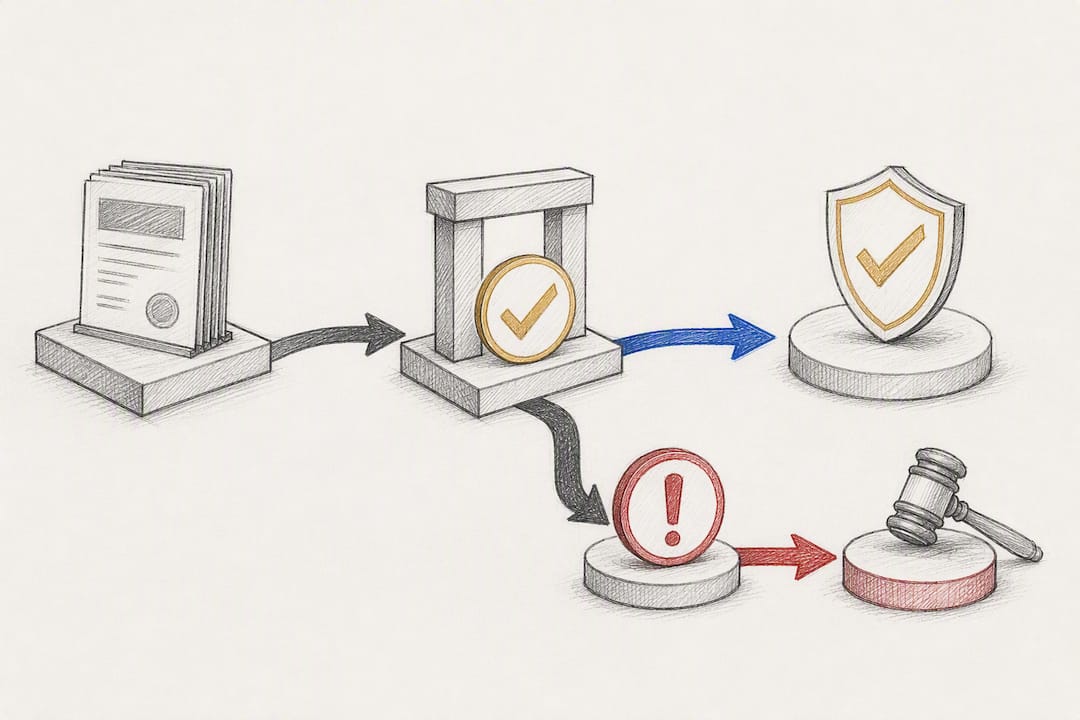
The financial exposure here is modest at the company level but the operational damage from a lapsed secretary role is not. A vacant office beyond six months brings a fine of up to S$1,000 for the company and its directors, while engaging an unregistered CSP exposes that provider to penalties including fines of up to S$50,000 and imprisonment of up to two years, a risk that flows back onto you if their filings are later found invalid.
Watch for these signs when assessing your current arrangement:
Filings lodged late or endorsements missed without explanation.
Statutory registers that are incomplete, outdated, or held in an inaccessible format.
A provider who won’t confirm their CSP registration status or name their RQIs.
No BizFile record showing you as an active client of the firm handling your filings.
Pro Tip: Run a five-minute check on ACRA’s CSP register whenever you’re evaluating a new provider, or reviewing an existing one after a period of poor communication. It costs nothing and tells you immediately whether they’re legally entitled to be doing the work.
How do you choose the right company secretarial provider?
Choosing well here is a due diligence exercise, not a price comparison. Ask for evidence, not assurances.
Request documentary proof: CSP registration confirmation, named RQIs, BizFile authorisation showing you as a client, and their AML/CPF/CFT policy summary.
Clarify operational expectations: a named point of contact, a service level agreement on filing turnaround, secure document retention practices, and a documented plan if your named secretary leaves the firm.
Understand the commercial terms: whether you’re on a retainer or paying per transaction, what triggers additional fees, and how escalations are handled if something goes wrong.
Weigh demonstrable experience: a provider with a long track record across Singapore incorporations and cross-border structures, such as Headington Management, which has operated for over 25 years across both domestic and international corporate work, gives you more confidence than a firm that’s only handled domestic filings.
Pro Tip: Ask any shortlisted provider for two client references in your specific sector. A generalist secretarial firm can file forms competently, but one with sector experience will flag the compliance triggers specific to your business before they become problems.
Why compliance gaps here escalate faster than most directors expect
Most secretarial breaches don’t start as legal problems. They start as a missed reminder or a departing employee nobody replaced in time, and they only become legal problems once a bank, auditor, or investor asks a question the company can’t answer cleanly. I’ve seen the sole director and sole secretary rule alone stall funding conversations, simply because nobody checked Section 171 before the company was three years old. Get the secretarial function right early, and it stops being a compliance chore and starts being proof, to banks, acquirers, and regulators alike, that your company is run properly.
— Colin
How Headington Management keeps your company compliant
This service is the alternative to managing this yourself when the six-month clock, ACRA filings, and CSP registration checks are pulling focus from actually running your business. It provides named company secretary appointments, handles ACRA filings through BizFile directly, and maintains your statutory registers on an ongoing basis, so nothing lapses quietly in the background.
Getting started is straightforward: an initial compliance check against your current filings and registers, a written engagement letter setting out exactly what’s covered, and a handover checklist if you’re switching from an existing provider or bringing the role in-house for the first time. If your secretarial function needs a compliance-assured home, get in touch with Headington Management to discuss your company’s specific requirements.
Sources
Appointing company directors and other key officers | Accounting and Corporate Regulatory Authority
Corporate Service Providers Act 2024 (CSP Act) — Singapore Statutes Online
Appointing or withdrawing position holders | Accounting and Corporate Regulatory Authority
Companies Act 1967 — Section 171 (Secretary) — Singapore Statutes Online
FAQ
Who Can Be Appointed As A Company Secretary In Singapore?
The secretary must be a natural person ordinarily resident in Singapore, and in a company with only one director, that director cannot also serve as the sole secretary.
How Soon After Incorporation Must A Company Appoint A Secretary?
A company secretary must be appointed within six months of incorporation, and the role cannot then remain vacant for more than six continuous months.
What Happens If The Company Secretary Role Is Left Vacant Too Long?
The company and its directors risk a fine of up to $1,000 for leaving the office vacant beyond the six-month limit.
Is It Legal To Outsource Company Secretarial Duties In Singapore?
Yes, but only to a provider registered under the Corporate Service Providers Act 2024; using an unregistered provider carries fines of up to $50,000 and imprisonment for the operator.
How Quickly Must Officer Changes Be Reported To ACRA?
Companies must notify ACRA of any appointment or withdrawal of a position holder, including the company secretary, within 14 days of the change.
Comments